
Kubernetes Multi-Tenancy:
Why multi-tenancy is misunderstood
Kubernetes was not originally built for strict multi-tenancy. It was built for:
- Fast scheduling
- Declarative state
- Infrastructure abstraction
Multi-tenancy was added through discipline, not defaults.
This distinction matters.
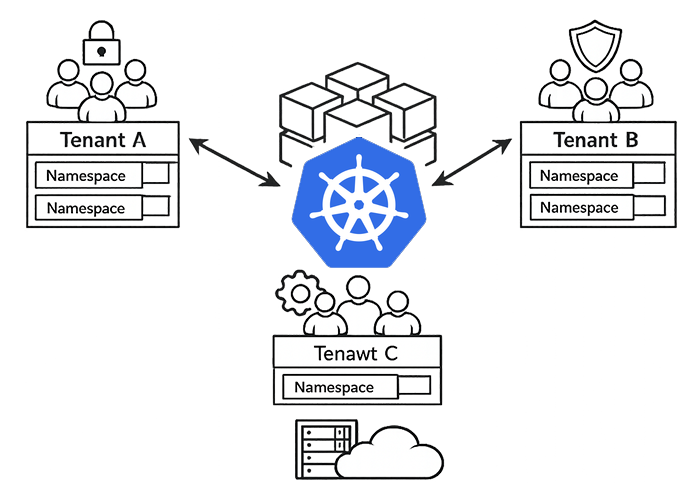
What “multi-tenancy” actually means in Kubernetes
At its core, multi-tenancy is about blast radius control across:




If any one of these leaks, you don’t have real multi-tenancy – you have shared risk.
The three models of Kubernetes multi-tenancy:
1. Namespace-based (most common)
- One cluster
- Multiple namespaces
- Shared control plane
Pros
- Cost efficient
- Easy to manage
Cons
- Weak isolation
- Misconfigured RBAC can be catastrophic
Best for:
- Internal teams
- Trusted workloads
2. Cluster-based (strong isolation)
- One cluster per tenant
- Full isolation
Pros
- Strong security boundaries
- Clean ownership
Cons
- Higher cost
- Operational overhead
Best for:
- Regulated workloads
- External customers
3. Hybrid (what mature orgs use)
- Shared clusters for internal teams
- Dedicated clusters for sensitive workloads
This is where most enterprise platforms land after real incidents.
Core building blocks (non-negotiable)
To do multi-tenancy correctly, you must implement:





Miss one, and isolation becomes theoretical.
A simple example that makes it clear
Scenario: Two teams, one cluster
Team A
- Backend APIs
- High memory usage
Team B
- Batch jobs
- CPU intensive
Without quotas
Team B runs a batch spike → Team A APIs slow down → Customers feel it.
With proper multi-tenancy
- Namespaces per team
- CPU/memory quotas
- Network isolation
- Team B fails safely.
- Team A stays healthy.
- That is multi-tenancy.
The executive takeaway
Kubernetes multi-tenancy is not a feature. It is an operating model.
If your organization lacks:
- Strong platform ownership
- Clear guardrails
- Continuous policy enforcement
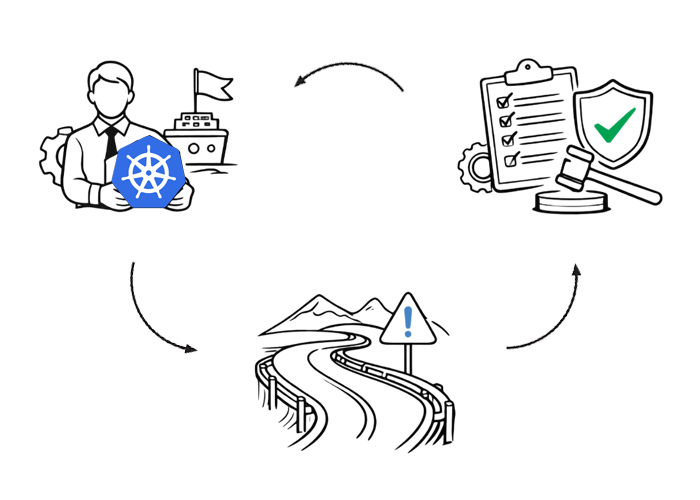
Then separate clusters are cheaper than shared mistakes.
“Technology is easy.
Clarity is hard – and that’s where leadership matters.”
We Can Handle
Your Idea
Write an email or a message, tell us your story and we will come up with the best solution for your future robust product